
The solution for the RAAC
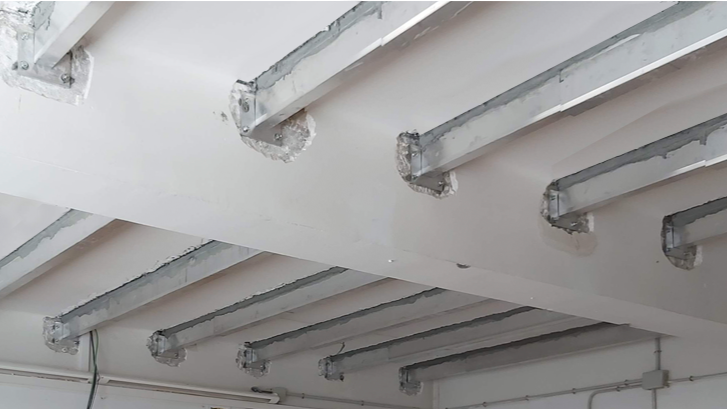
EXTEND SYSTEM beams: structural innovation
Design · Lightness · Precision
At SÉNETON, innovation drives everything we do. Our mission is to understand each structural challenge in depth and turn it into a solution that is efficient, safe and practical — built around real conditions on site.
But what makes EXTEND SYSTEM beams genuinely different, and how are companies already using them to gain a competitive edge?
From problem to solution on site
Every project follows the same clear technical process.
1. Identify the cause of deterioration
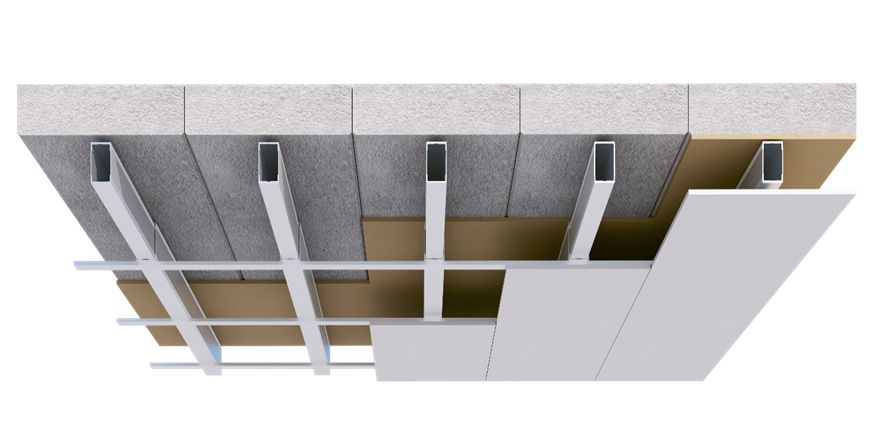
Moisture, carbonation of the concrete, or outdated materials such as RAAC. EXTEND SYSTEM beams act as support for RAAC panels and for fireproof insulation.
2. Design a beam that can actually be installed
Fast, clean and safe — even in occupied buildings or where access is difficult. Innovation starts at the design stage.
A smart solution
EXTEND SYSTEM beams were created with three principles in mind:
- Lightness — for effortless transport and installation.
- Strength — extruded aluminium with rectangular, variable-face sections, optimising weight against performance.
- Non-invasive assembly — a telescopic system requiring no screws, bolts or welding.
Each beam is made up of modular sections that fit together precisely. They can be carried through narrow spaces and adjusted to the exact span on site.
Versatile by design
The system comprises six profiles that combine telescopically. With only two or three sections it is possible to produce a beam of the exact length required, covering a wide range of structural needs.
Why choose EXTEND SYSTEM
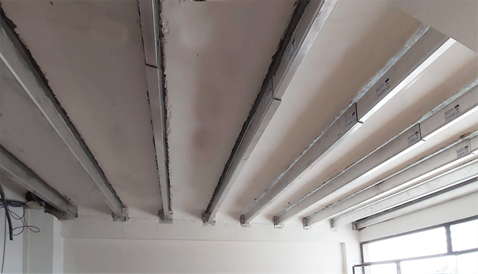
- A precision-engineered system with six adaptable profiles
- Over 30 years of successful installations
- Certified and tested in accredited laboratories since 1993
- Spans over 7 metres, supporting loads above 1,000 kg/m²
EXTEND SYSTEM beams are changing how deteriorated structures are reinforced: quick to install, safe, and non-invasive.
SÉNETON, S.A. is the manufacturer of the patented EXTEND SYSTEM. This article was first published on LinkedIn.


